
Happy 169th Birthday Thomas Edison!
 Comments (0)
 This past week marks Thomas Edison's 169th birthday! Thomas Edison invented the phonograph, in 1877 today he would of been celebrating his 169th birthday!
Comments (0) This past week marks Thomas Edison's 169th birthday! Thomas Edison invented the phonograph, in 1877 today he would of been celebrating his 169th birthday!

If there’s one type of song that we will never grow tired of, it is the ever popular love song. Mellow or upbeat, mushy or filled with angst; whatever the tempo or the lyrical content…Enjoy these nine timeless love songs from the 1920s found in the Recorded Sound Archives Vintage, Judaic and Jazz collections just in time for Valentines day.
Some songs may only be available as snippets due to US Copyright laws.

Producers began looking for better options and started experimenting with materials that were lighter, flexible and less fragile.
One of these experiments, Hit of the Week records, were actually made of resin coated brown paper! This lightweight, flexible, “unbreakable” composition was unique and provided a 78 rpm recording with sound equal to or better than ordinary shellac.
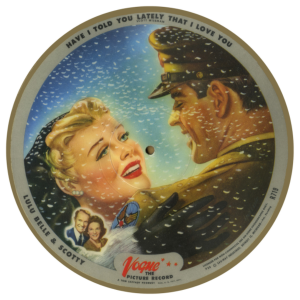
The Second World War waged around the globe from 1939 to 1945.
The impact of WWII on the daily lives of Americans and Europeans cannot be overstated. As the atrocities of the Nazis raged in Europe, American men were drafted and called to war. American music of the WWII era spoke to the soldiers far from home and also to those they left behind.
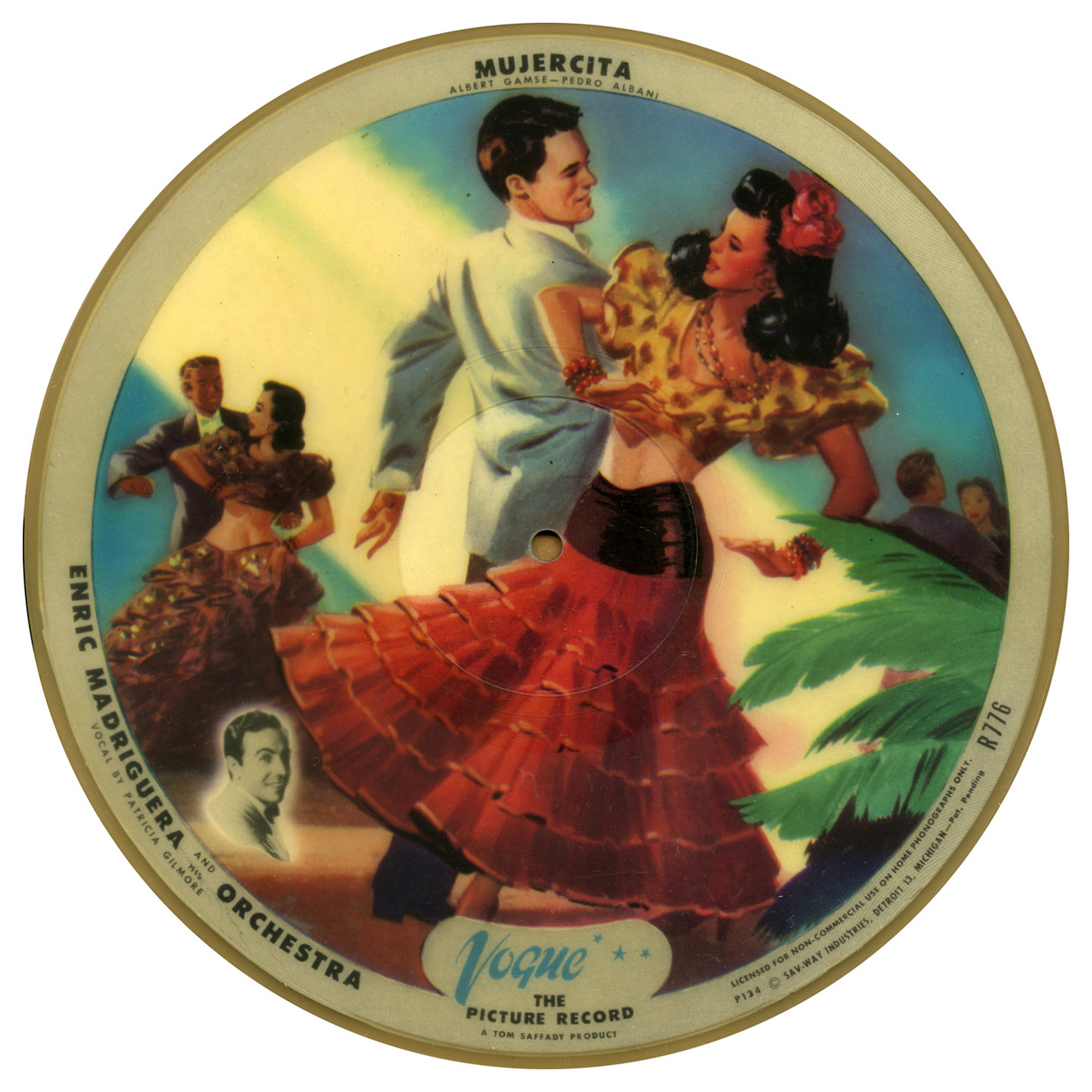
Several of the Vogue Picture records in the Recorded Sound Archives at FAU Libraries capitalize on America’s love affair with Latin rhythms during the 1930s , 40s and 50s.
During the Prohibition Era (1920-1933), Havana, Cuba was a popular tourist destination for Americans seeking fun and excitement. One of the pleasures they discovered there was the rhumba. Popularized by performers such as Spanish-Cuban bandleader Xavier Cugat and Desi Arnaz, Latin ballroom dances and rhythms became a common staple of American entertainment for decades.

