In celebration of college football season starting, we wanted to share a recording we have here at the Recorded Sound Archives by Walter Camp known as the Father of American Football.
While working as an adviser to the United States military during World War I, Camp devised a program to help servicemen in both the Navy and Army become more physically fit. Camp wrote a book explaining the exercises and extolling their benefits. This book was later taken and recorded in 1921 and marketed to a wider audience with the Musical Health Builder record sets called the Daily Dozen Health Building Exercises.Read More About This…
Did you know the Recorded Sound Archives at FAU Libraries has over 49,000 albums along with over 150,000 songs in its databases, which is growing everyday with the help of volunteers? With so many recordings to choose from, we have given Research Station users the ability to request items be digitized.
Below you’ll find a list of recordings that were recently added to the Research Station this Spring 2019 from requests made by Research Station Users.Read More About This…
In celebration of children’s book week, discover our children’s collection of recordings featuring stories, lullabies, nursery rhymes and more.
This collection of children’s music was produced mostly during the 1940s and 1950s, a time when vinyl replaced hard shellac as the basic material used in the making of phonograph records. The innovation of vinyl allowed manufactures to produce kid-friendly recordings that could be handled without adult supervision. These recordings became an extremely popular form of entertainment for children in the days before families had television sets.Read More About This…
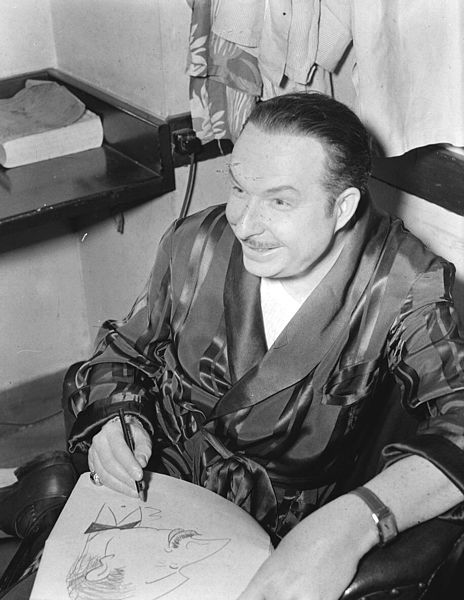
Photo of Xavier Cugat. This work is from the William P. Gottlieb collection at the Library of Congress.
As part of Hispanic / Latino Heritage month, we’d like to take the opportunity to introduce you to some important artists who shaped the world of Latin music into what it is today. Today we would like to highlight Xavier Cugat. Born January 1, 1900 in Catalonia, Spain, his family had bigger plans venturing first to Cuba when he was five. In Cuba, this is where Xavier picked up the violin training as a classical violinist he went on to play with the Orchestra of the Teatro Nacional in Havana.
Photo of Xavier Cugat. This work is from the William P. Gottlieb collection at the Library of Congress.
Xavier trained further in Paris and Berlin and in 1915, his family boarded the SS Havana en route to New York City where Cugat went on to train before serving five years as a violinist appearing in recitals with Erinco Caruso. Cugat went on to lead the resident orchestra at the Waldorf-Astoria before and after World War II before venturing out west to Los Angeles.Read More About This…

 Comments (0)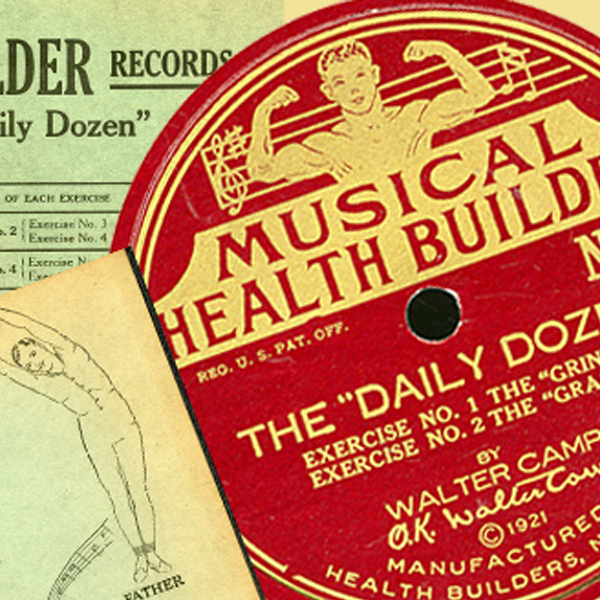




.jpg)