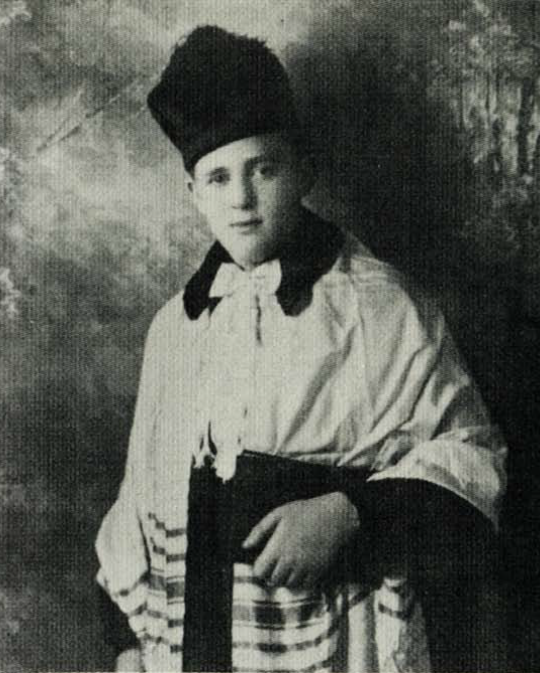
For five generations, the Lind Family, descended from Belzer Hassidim in Galicia, sang the songs of the synagogue. It was from this lineage that Joshua Lind (1890—1973) rose to prominence as a composer, cantor and teacher. Joining his father’s synagogue choir at the age of 5, young David Lind quickly became a Cantorial wunderkind touring the country and recording for RCA Victor.
Together with his brothers, Murray and Phil, David formed the Lind Brothers Trio in 1937. They became quite popular performing a repertoire especially created for them by their father, Cantor Joshua Lind.Read More About This…
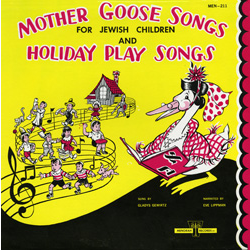
Album Cover of Mother Goose Songs for Jewish Children and Holiday Play Songs
If you can remember the 1940s and 1950s then you are old enough to remember the heyday of vinyl children’s records. Perhaps you sat for hours on end listening to the phonograph as its spinning turntable produced stories and songs that only seemed to improve with each playing. This was the golden age of American vintage kiddie recordings.
Yet, it took a pioneer to ask: why not create kiddie records that would be relevant for Jewish children?Read More About This…
Chanukah celebrations are joyous occasions with lots of holiday gifts, decorations and parties.
The eight-day festival of Chanukah retells a story about hope, the importance of maintaining Jewish traditions, and the symbolic power of light.Read More About This…
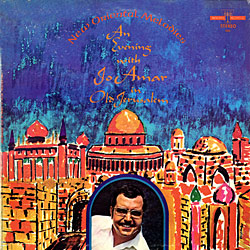
The early settlers of Israel looked towards their roots for musical inspiration. For many this meant the tones and tunes of Eastern Europe. However, there were were also those who wanted to create a new style of music that would belong uniquely to Israel and reflect their new country. The songs written in this new “Israeli” style combined familiar Eastern European motifs, traditional Sephardic melodies and more exotic Middle Eastern and North African influences. For many these more “Eastern” exotic influences seemed closer to biblical music and reflective of the land of Israel. This new musical style is generally known as Mizrahi music.
A pioneer of this new style of Israeli music was Josef “Jo” Amar. A noted Moroccan-born Israeli singer and hazzan, Amar began his singing career in the late 1940s in Morocco before he moved to Israel in 1956.Read More About This…

 Comments (0)