
Earth Day Echoes: Preserving Nature Through Sound
Recent headlines about newly rediscovered whale recordings have captured the public imagination, reminding us just how powerful sound can be in understanding the natural world. In fact, the earliest known whale song recorded in 1949 during underwater sonar experiments was only recently identified, offering a rare glimpse into a quieter ocean of the past.
At the Recorded Sound Archives (RSA), discoveries like these resonate deeply. While archives are often associated with music, sound collections also preserve the voices of the natural world, capturing animals, environments, and ecosystems across time. Earth Day provides an opportunity to reflect not only on the environments we protect, but on the sounds that define them.
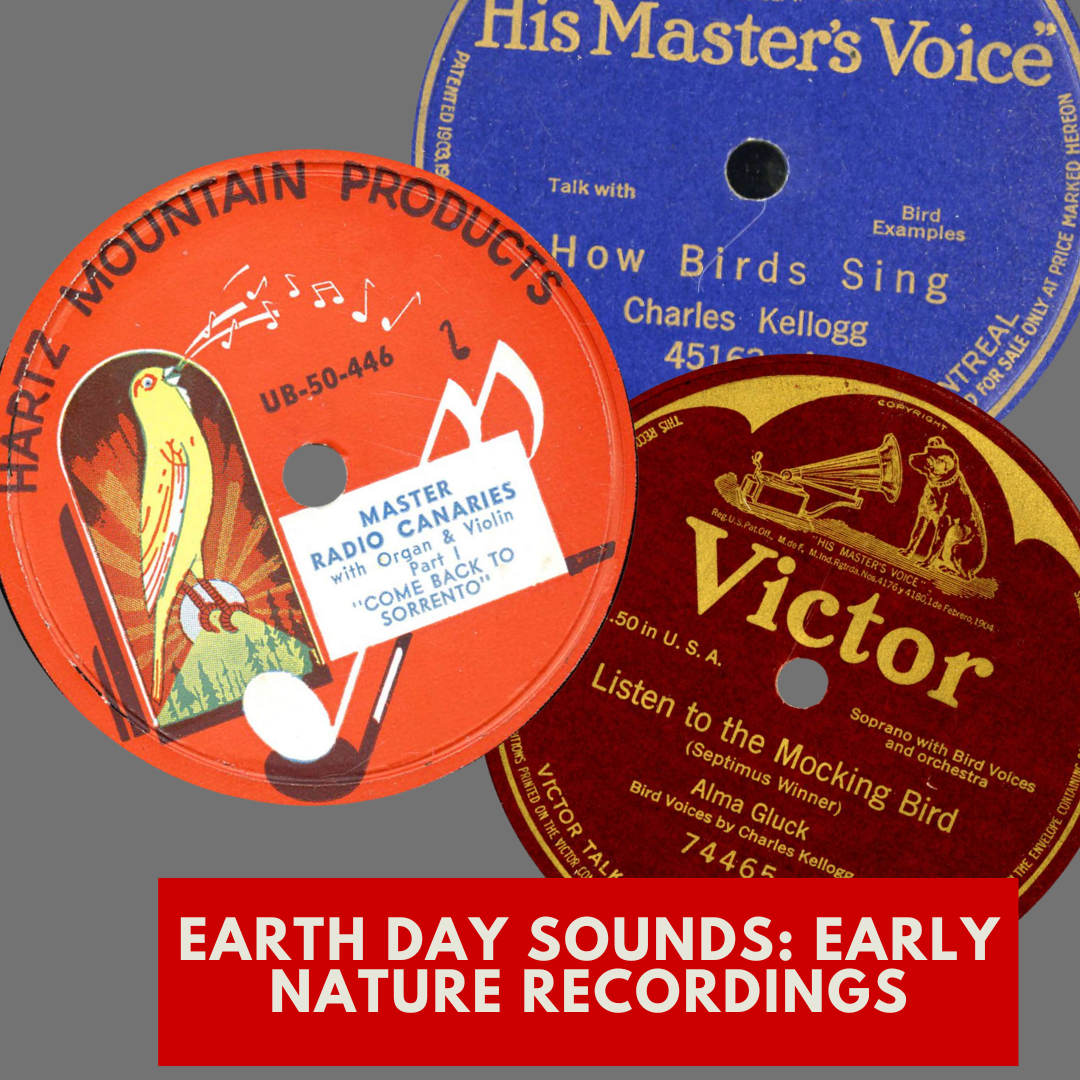
Long before modern field recording techniques, pioneers such as Charles Kellogg were documenting the natural world through sound. Known as the “Log Cabin Troubadour,” Kellogg was an early advocate for recording wildlife. While famous for his ability to mimic bird calls, he also made some of the earliest field recordings of birds using acoustic technology. These recordings are more than historical curiosities; they are snapshots of ecosystems from over a century ago.
Animal sound recordings span a wide range of formats and purposes. Early field recordings of birds helped scientists identify species by their calls, while mid-century educational records introduced listeners to frogs, insects, and other environmental soundscapes. Marine recordings often created through naval or scientific research reveal the hidden acoustic lives of whales and dolphins, species that rely on sound for communication, navigation, and survival.
Commercial recordings also played a role in bringing nature into everyday life. Hartz Mountain canary training records, for example, were designed to encourage pet canaries to sing by exposing them to recorded bird songs. Played in homes across the country, these discs reflect an intriguing intersection of technology, domestic life, and the natural world, where recorded sound was used not only to preserve nature, but to shape it actively.
These recordings are more than curiosities; they are data. Today, researchers use historical audio to study how environments have changed, including the growing impact of human noise on animal communication. A single archival recording can serve as a baseline, helping scientists understand how the soundscape of an ocean or forest has evolved over decades. As habitats change and biodiversity declines, some of the sounds captured in early recordings may now be rare or lost entirely.
At RSA, exploring animal recordings can feel like a form of time travel. Each crackle of an early disc or hum of a field recording device carries with it a moment of listening one that connects us not only to the past, but to the living world around us.
This Earth Day, we invite you to listen closely. Whether it’s a bird song etched into a 78rpm disc or a whale call preserved on magnetic tape, these sounds remind us that preserving nature includes preserving its voices.

