
The Latin Pulse of Jazz: Dizzy Gillespie’s “A Night in Tunisia” and “Manteca”
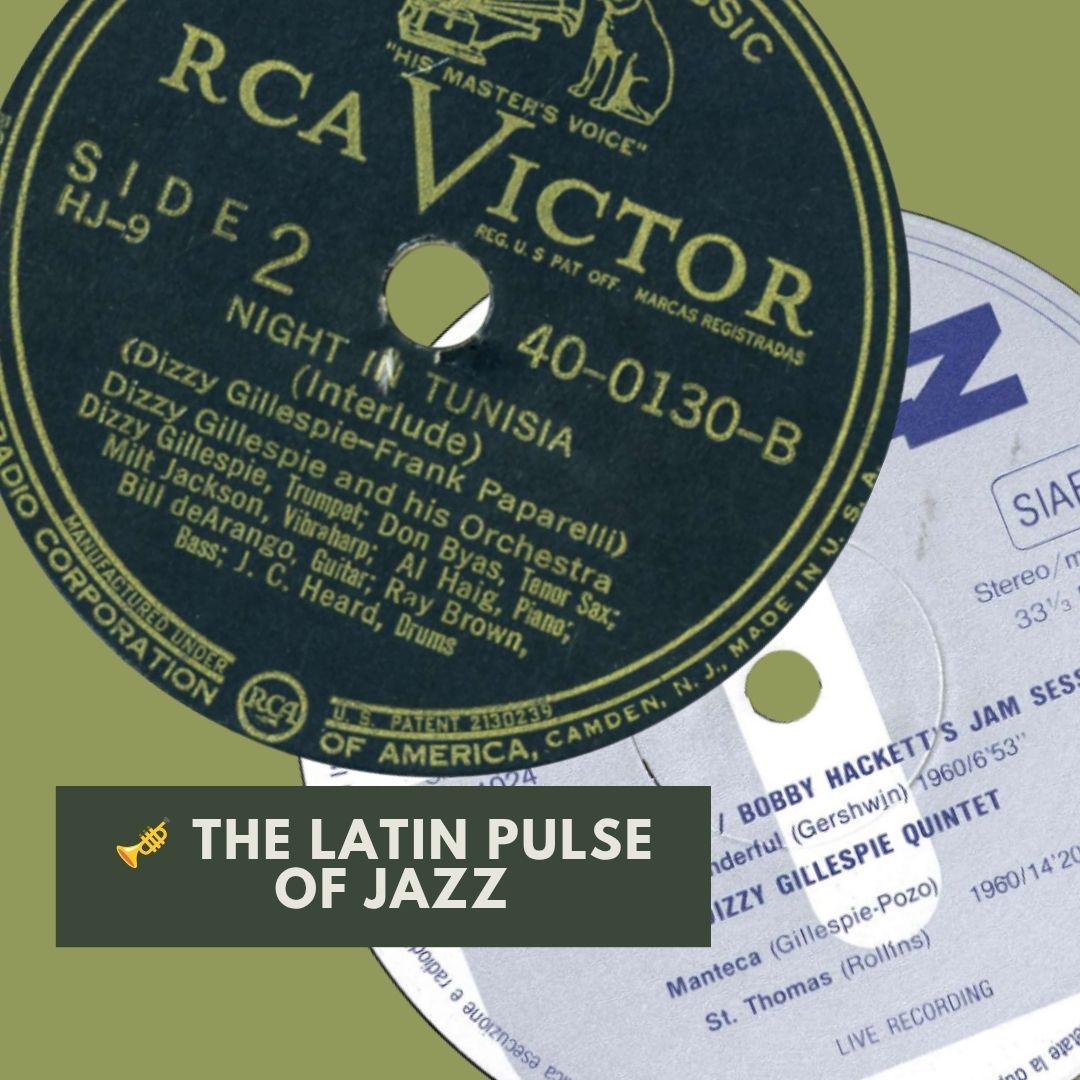
This month, we’re highlighting two iconic jazz compositions in which the vibrant rhythms and spirit of Latin music played a major role: “A Night in Tunisia“ and “Manteca,” both associated with the legendary jazz musician Dizzy Gillespie.
These classics demonstrate how beautifully jazz and Latin musical traditions can come together to create something truly unforgettable.
Dizzy Gillespie was a brilliant trumpet player, bandleader, and composer who became one of the most influential figures in jazz history, particularly in the development of bebop, a style known for its fast tempos, harmonic complexity, and rhythmic unpredictability.
One of the defining works of the bebop era is “A Night in Tunisia.” Written around 1941-42, the composition eventually became a jazz standard and one of Gillespie’s signature pieces. Interestingly, Gillespie originally titled the work “Interlude.” He later joked that “some genius” had decided to rename it “Night in Tunisia.” Despite the popularity of the title “A Night in Tunisia,” Gillespie himself generally preferred “Night in Tunisia.”
Another landmark composition is “Manteca,” created in 1947 by Dizzy Gillespie and Cuban percussionist and composer Chano Pozo. By blending jazz improvisation with Afro-Cuban rhythms and percussion, the pair helped pioneer a new musical direction that became known as Afro-Cuban jazz. Today, Manteca remains one of Gillespie’s most celebrated and influential works, illustrating the powerful creative exchange between jazz and Latin musical traditions.
As we celebrate Hispanic Heritage Month, these two compositions serve as lasting reminders of the profound influence Latin musicians and musical traditions have had on the history and evolution of jazz.
Discover more Latin Musicians on the Recorded Sound Archives.

